Early Baroque Origins
The Dawn of a New Age (Early 1600s)
The opening of our journey begins in a century poised between Renaissance balance and Baroque intensity. Around 1600, Europe was reshaping its sense of the world: the cosmos had been redrawn by Copernicus and Galileo, religious wars were tearing nations apart, and artists sought new ways to move the human spirit.
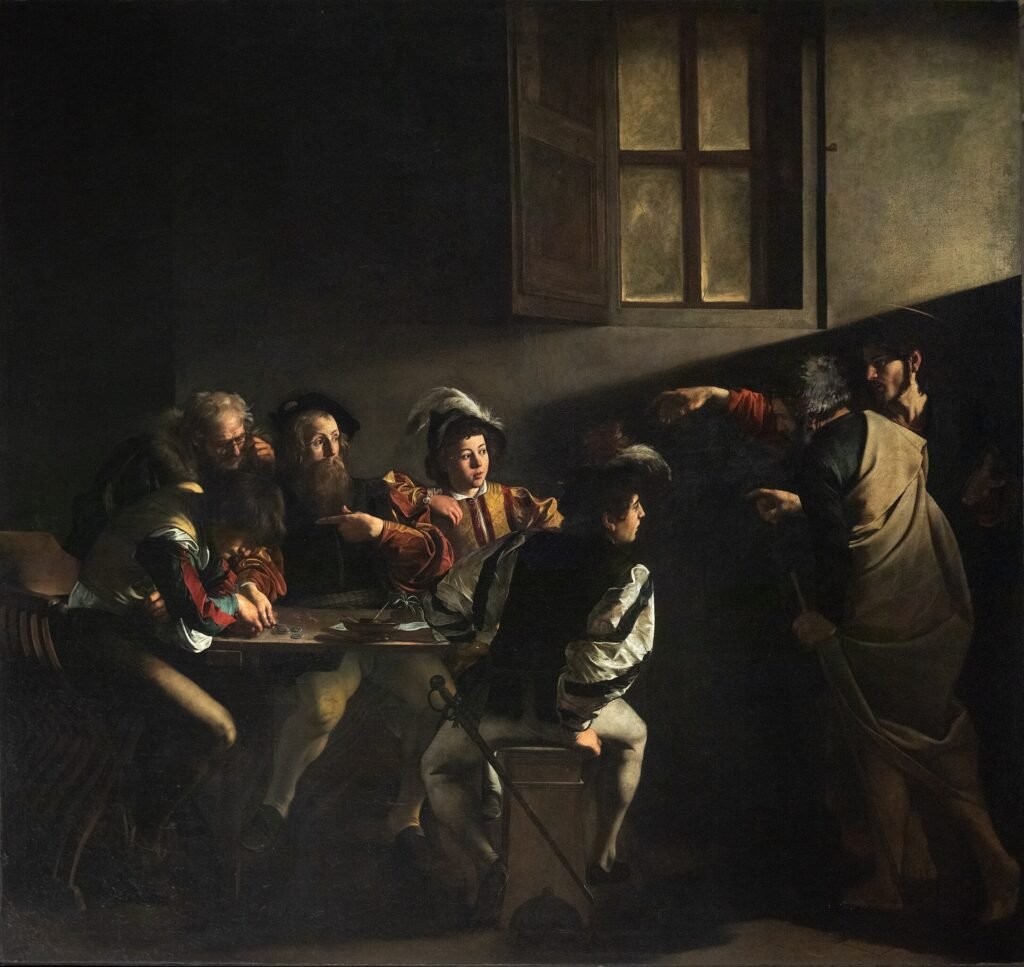
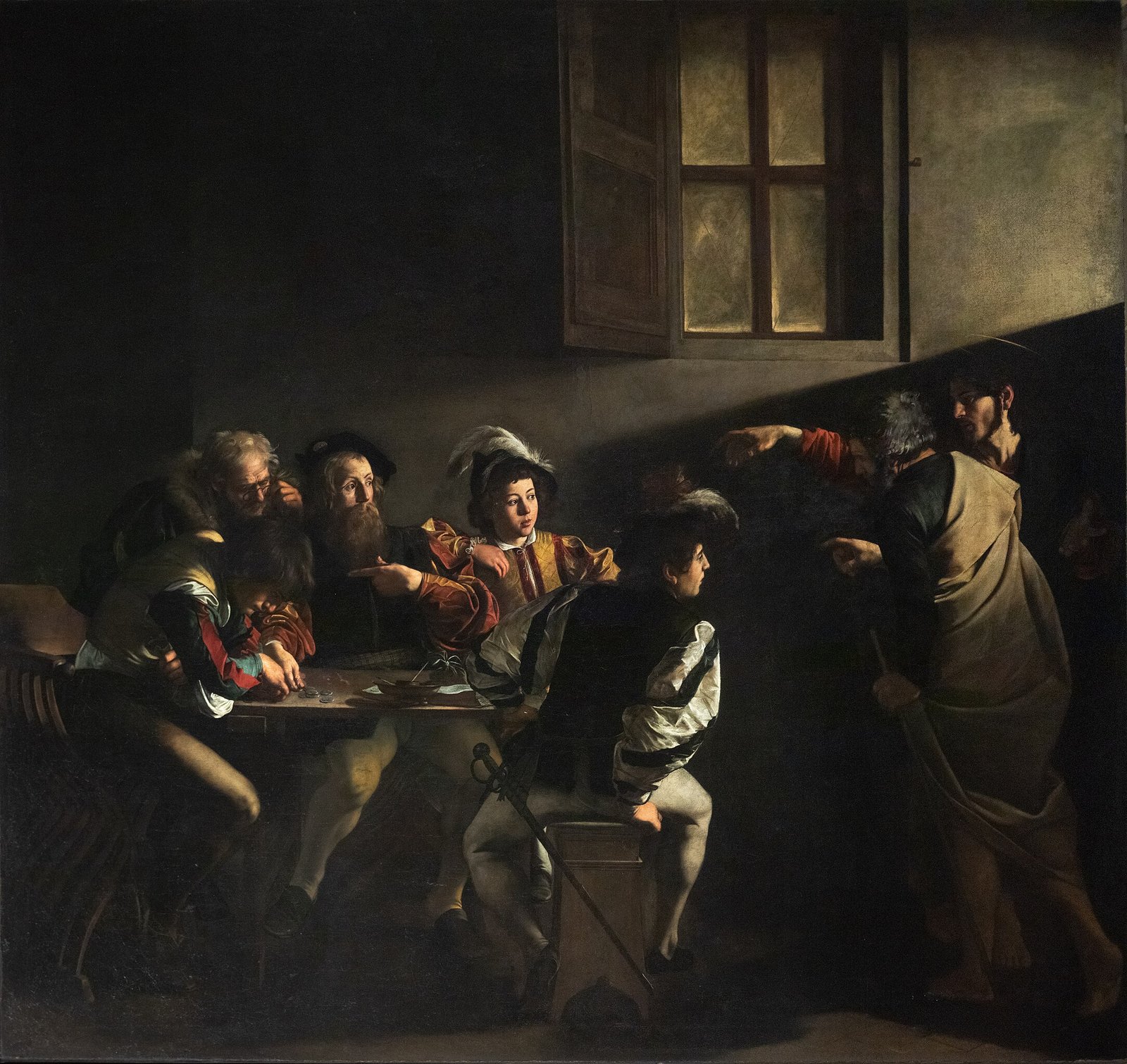
This week’s selections capture the birth of the Baroque — an art that no longer contented itself with harmonious proportion alone, but strove instead to seize the listener, the viewer, the reader, and stir them to passion. Monteverdi’s L’Orfeo offers us the first great flowering of opera, where music became theatre and myth became living sound. Caravaggio’s Calling of Saint Matthew shocks the eye with light and darkness, its drama as immediate as any stage performance. Il Gesù in Rome, with its sweeping nave and gilded chapels, embodies the Catholic Church’s new architecture of persuasion. Cervantes’ Don Quixote bends prose into a mirror of human folly and yearning, while Francis Bacon’s Advancement of Learning sets forth a modern creed of empirical discovery.
Together, these works show a culture turning outward — eager to persuade, to astonish, to test the limits of imagination and knowledge. For the conductor, Week 1 is an invitation to listen and to look with fresh intensity: to feel how an age of turbulence forged new ways of perceiving, and to consider how the artist’s task is not only to perfect form, but to awaken the soul.
Claudio Monteverdi – L’Orfeo (1607)
The first great opera: myth, music, and theatre fused into a living drama of human passion and divine power.
Notes (for cultivated perception):
Monteverdi’s L’Orfeo is more than an historical curiosity — it is a revelation of what music could become at the dawn of the 17th century. Commissioned by the Gonzaga court in Mantua, the work takes the ancient myth of Orpheus and Eurydice and shapes it into a new form of musical storytelling. Here we see music liberated from the confines of madrigal and motet, reaching outward to embrace theatre, poetry, and ritual.
What makes L’Orfeo so striking for cultivated perception is the balance it holds between tradition and invention. Monteverdi does not abandon polyphony; instead, he sets it beside expressive recitative and solo song, contrasting the learned style of the Renaissance with the emotional immediacy of the new Baroque. Instrumental colour, too, becomes part of the drama — strings, brass, and continuo each take on symbolic roles, painting Orpheus’ descent into grief and his attempt to charm the underworld.
For the conductor, L’Orfeo is a reminder that all music carries a dramatic impulse. Even in non-operatic repertoire, there is a stage within the sound, a story being told. To cultivate perception here is to learn how a single chord, a sudden shift from major to minor, or the entrance of a trumpet can alter the entire emotional atmosphere. The lesson of Monteverdi’s pioneering work is that music’s power lies not only in structure, but in its capacity to move an audience from within.
Reflection:
When you listen to or study L’Orfeo, ask: where does Monteverdi let music simply speak, almost like speech itself, and where does he intensify it into song? How might those same choices of declamation and release shape your interpretation of later works?
Painting: Caravaggio – The Calling of Saint Matthew